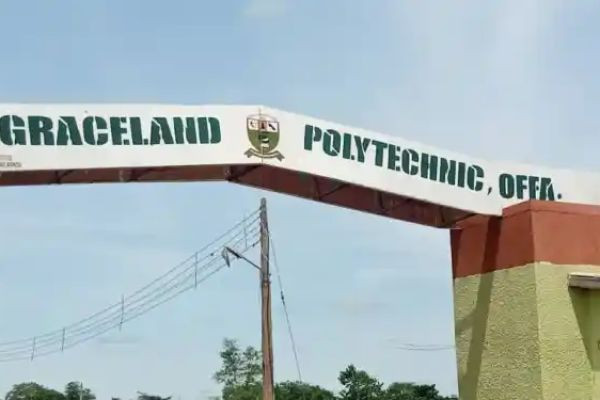
Graceland Polytechnic, Offa, has acknowledged that some of its graduates were affected by the non-accreditation of certain academic programmes at the time of their admission, attributing the issue to lapses under a previous management team. The admission comes in a rejoinder issued by the institution’s management in response to an investigative report highlighting the enrolment of students into programmes later found to be unaccredited by the National Board for Technical Education (NBTE).
While reiterating that Graceland Polytechnic is a fully licensed private institution, the management confirmed that programmes such as Mass Communication and Science Laboratory Technology (SLT) only received NBTE accreditation in January 2025, years after affected students had been admitted and graduated. The institution clarified that this accreditation “does not cover students who graduated before the effective date,” an acknowledgment that aligns with complaints from graduates struggling to gain admission into Higher National Diploma (HND) programmes or secure Direct Entry into universities.
Management Distances Itself from Past Admissions
The Polytechnic stressed that the admissions in question occurred during a “transition period” preceding the current administration. “Any regulatory gaps referenced relate to a period before the current administration,” the statement read, noting that a new Governing Council and Management Team has since assumed office and initiated reforms to bring the institution fully in line with NBTE standards.
While the school rejected claims that students were abandoned, it did not provide specific remedial measures such as conversion programmes, revalidation options, or institutional support for graduates whose certificates remain ineligible for further academic progression. Instead, the management stated it has been offering “guidance to affected graduates within the framework of NBTE regulations,” without addressing the core concern regarding the validity of academic credentials.
The institution assured prospective students and parents that all current programmes are fully accredited and compliant with NBTE guidelines. However, it did not dispute the central allegation that some students were admitted into programmes lacking accreditation at the time, nor did it explain why admissions continued prior to regulatory approval. The NBTE has yet to issue a public statement on the matter.
Graduates Push Back
The Polytechnic’s explanation has sparked strong reactions from affected graduates. Many insist that eventual accreditation does not erase the consequences suffered by students who completed programmes under unaccredited status.
“I am not disputing that accreditation was eventually done, but what happens to the pre-accreditation victims?” asked Oladosu Abdulhammed Kewugbemi, calling on the former Registrar, Mr. Ibitoye Abiodun Timothy, to publicly explain the circumstances surrounding the admissions.
Some graduates also disputed the timeline provided by the Polytechnic, claiming that accreditation was completed in 2023, not 2025, and that the new management only assumed office in August 2024.
Students Feel Betrayed
Several affected alumni expressed frustration, describing their experience as a betrayal. One graduate said, “We didn’t sneak into the school. We were admitted, paid full fees, attended classes, wrote exams, and graduated—only to discover later that the programme we dedicated our lives to was never accredited and our admission was not even on JAMB CAPS.”
Others argued that the issue extends beyond institutional reforms:
“This is not about new management. You cannot fix tomorrow by ignoring yesterday. Students’ lives were wasted. Years were lost. Resources were taken under false assurances,” another graduate stated.
Calls for Regulatory Intervention
The controversy has prompted calls for accountability and intervention by education regulators, including NBTE and the Joint Admissions and Matriculation Board (JAMB). As of now, neither body has publicly addressed the allegations, leaving affected graduates questioning the validity of their certificates and the path forward.
For many, the pressing question remains: what becomes of academic credentials earned under programmes that were unaccredited at the time of study?
follow us on whatsapp
https://whatsapp.com/channel/0029VaAOIUe9mrGeBhrju12b
Download our Mobile App for easy access
https://play.google.com/store/apps/details?id=com.edutvmobile.ng&hl=en
Mobile App Lite
https://play.google.com/store/apps/details?id=com.edutvng.lite
https://play.google.com/store/apps/details?id=com.edutvmobile.ng&hl=en
Follow us on Youtube
https://youtube.com/@edutvnigeria
Follow us on LinkedIn -
https://ng.linkedin.com/company/edutvnigeria
Follow us on Instagram
https://instagram.com/edutvnigeria
Follow us on Facebook
https://www.facebook.com/edutvnigeria/
follow us on whatsapp
https://whatsapp.com/channel/0029VaAOIUe9mrGeBhrju12b
Download our Mobile App for easy access
https://play.google.com/store/apps/details?id=com.edutvmobile.ng&hl=en
Mobile App Lite
https://play.google.com/store/apps/details?id=com.edutvng.lite
https://play.google.com/store/apps/details?id=com.edutvmobile.ng&hl=en
Follow us on Youtube
https://youtube.com/@edutvnigeria
Follow us on LinkedIn -
https://ng.linkedin.com/company/edutvnigeria
Follow us on Instagram
https://instagram.com/edutvnigeria
Follow us on Facebook
https://www.facebook.com/edutvnigeria/