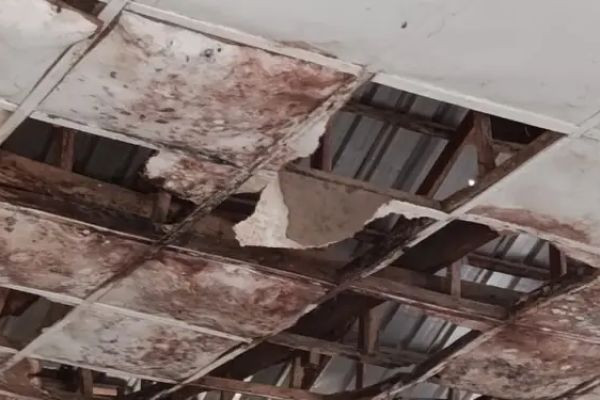
Across Nigeria, the deterioration of public school infrastructure is fast evolving from isolated incidents into a nationwide emergency. From roofless classrooms to entire school compounds left in ruins, millions of children are being pushed into unsafe learning environments that threaten both their education and their safety.
What is unfolding goes beyond routine maintenance failures. It signals a systemic breakdown in infrastructure management — one that is quietly reshaping the schooling experience for thousands of families.
Makani, FCT: Learning Inside a Hazard Zone
In Makani community under the Abuja Municipal Area Council of the Abuja, more than 200 pupils attend classes in what residents describe as hazardous conditions.
The Local Education Authority (LEA) Primary School serving the community shows visible signs of structural decay. Broken roofs, collapsed ceilings and exposed wooden beams have turned classrooms into potential danger zones. During rainfall, water reportedly floods learning spaces, forcing lessons to halt. Under intense heat, the classrooms become stifling.
Parents say they now send their children to school with anxiety, fearing possible structural failure. Frequent disruptions have slowed academic progress and weakened pupils’ concentration.
Community leaders are demanding urgent structural assessments, emergency rehabilitation and accountability in the management of education infrastructure. For families in Makani, the concern is straightforward: schooling should not endanger children’s lives.
Dagiri, FCT: When a School Disappears
In Dagiri, Kwali Area Council of the Federal Capital Territory, the situation is even more alarming. The LEA Primary School has effectively ceased operations after classroom blocks collapsed and were abandoned.
More than 500 pupils have been displaced. The once-active school compound now stands overgrown and unusable, with academic activities halted indefinitely.
Residents attribute the decay to prolonged neglect and weak oversight, raising concerns about how long such infrastructure failures have gone unaddressed.
Bari-Bari, FCT: Learning in Exile
In Bari-Bari village, pupils have been forced to relocate to a mosque for lessons after windstorms tore off the roof of their primary school.
Attendance has declined significantly as parents withdraw children over safety concerns. A volunteer teacher now conducts improvised classes for lower grades, but community members describe the arrangement as temporary and unsustainable.
They warn that prolonged disruption could permanently derail pupils’ academic development.
Ekiti State: Teaching Amid Decay
At St Mary’s RCM Nursery and Primary School in Ikere-Ekiti, located in Ekiti State, deteriorating infrastructure has compelled teachers to merge classes into limited safe spaces.
Damaged roofs and unstable classroom structures frequently interrupt lessons, particularly during rainfall. The absence of adequate sanitation facilities has compounded the crisis, prompting some parents to withdraw their children.
Although renovation promises have been made, residents report little visible progress.
Lagos State: A Close Call in Ikorodu
In Lagos State, alarm was triggered when a classroom block at Odokerere High School in Ikorodu collapsed during school hours. Fortunately, no injuries were recorded.
Education stakeholders say the incident underscores the urgent need for proactive inspection and rehabilitation of ageing public school buildings across the state.
Enugu State: Investment Meets Structural Failure
In Enugu State, a newly completed Smart Green School sustained significant roof damage following a windstorm. Although pupils were not present at the time, the development raised questions about construction standards and project supervision.
Civil society groups argue that substantial public investments in education infrastructure must yield durable, climate-resilient structures.
A Nationwide Pattern of Neglect
Similar reports from multiple states reveal children learning under trees, in abandoned structures or inside overcrowded classrooms lacking desks, sanitation and safe roofing.
Education analysts warn that poor infrastructure directly impacts literacy outcomes, attendance rates and student retention. Thousands of classrooms nationwide are reportedly classified as structurally unsafe.
Communities Filling the Gap
In response, many communities have resorted to self-help initiatives — raising funds, volunteering as teachers and improvising temporary learning spaces.
While these efforts demonstrate resilience, policy experts caution that community intervention should not substitute institutional responsibility.
“When communities consistently fill infrastructure gaps, accountability weakens,” one education analyst observed.
The Human Cost
Unsafe classrooms expose children to physical injury, repeated learning disruptions and psychological stress. Overcrowded spaces compromise instructional quality, while inadequate sanitation disproportionately affects girls.
In some areas, persistent instability is driving children out of formal education altogether.
A Call for Systemic Reform
Education advocates are calling for comprehensive rehabilitation programmes, transparent oversight of funding allocations and routine infrastructure audits supported by community monitoring.
Experts maintain that isolated repairs cannot resolve what has become a structural national challenge requiring coordinated and sustained intervention.
As one community leader put it:
“Education is the foundation of our children’s future. We cannot allow our children to learn in fear.”
The Question Nigeria Must Answer
As classrooms collapse and schools disappear, the crisis demands more than acknowledgement — it requires decisive action.
For thousands of children, the constitutional promise of education now hinges on whether safe learning environments can be restored. The future of public education in Nigeria may depend on how urgently that response comes.
follow us on whatsapp
https://whatsapp.com/channel/0029VaAOIUe9mrGeBhrju12b
Download our Mobile App for easy access
https://play.google.com/store/apps/details?id=com.edutvmobile.ng&hl=en
Mobile App Lite
https://play.google.com/store/apps/details?id=com.edutvng.lite
https://play.google.com/store/apps/details?id=com.edutvmobile.ng&hl=en
Follow us on Youtube
https://youtube.com/@edutvnigeria
Follow us on LinkedIn -
https://ng.linkedin.com/company/edutvnigeria
Follow us on Instagram
https://instagram.com/edutvnigeria
Follow us on Facebook
https://www.facebook.com/edutvnigeria/