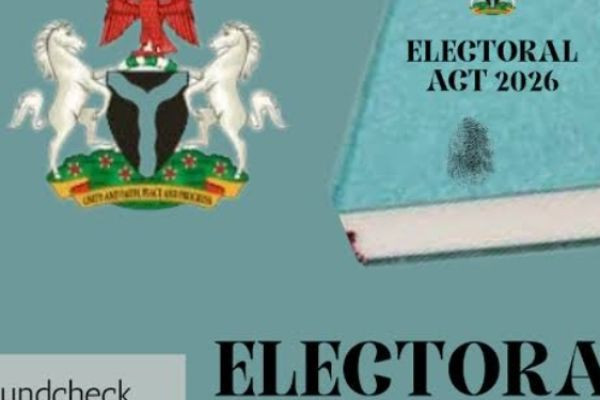
The recent amendment to Nigeria’s Electoral Act has stirred widespread concern among education stakeholders following the removal of certificate forgery as a recognised ground for challenging election results.
The development has sparked intense debate within the academic community, with many scholars and policy analysts questioning the implications for academic integrity and the role of educational qualifications in public leadership.
For decades, certificates issued by universities, polytechnics, and examination bodies have served not only as proof of academic achievement but also as key qualification requirements for individuals seeking public office in Nigeria. These credentials represent years of academic training, rigorous assessments, research, and institutional credibility.
However, the newly amended Electoral Act 2026 appears to have altered that legal framework.
Under Section 138 of the amended law, the grounds upon which an election may be challenged no longer include certificate forgery. Instead, election petitions can now only be filed on the basis that the election was invalid due to corrupt practices, non-compliance with the provisions of the Act, or that the declared winner was not duly elected by a majority of lawful votes cast.
The omission of certificate forgery from the list has raised alarm among education experts who fear the change may weaken the credibility attached to academic qualifications in national leadership.
Several academic administrators argue that if individuals accused of presenting forged academic credentials cannot be legally challenged through election petitions, it could erode public confidence in Nigeria’s education system and diminish the value placed on academic achievement.
Investigations by Nigeria Education News indicate that universities and examination bodies across the country have spent years strengthening mechanisms to combat academic fraud. These efforts include improved certificate verification systems, digital records, and stricter institutional safeguards designed to protect the integrity of academic credentials.
Despite these measures, the controversy surrounding the amended Electoral Act suggests that the fight against certificate fraud may now face new political and legal complications.
Among the most vocal critics of the amendment is Senior Advocate of Nigeria, Jibrin Okutepa, who described the removal of certificate forgery as a troubling development for Nigeria’s democratic and moral framework.
In a statement shared on his official X (formerly Twitter) account, the senior lawyer warned that the amendment could undermine accountability in public leadership.
“This is an outrage, a brazen attempt to redefine a society’s moral code by a morally compromised political class. When criminals rule, the society’s morals are turned upside down,” he stated.
Okutepa further noted that the presentation of forged certificates had historically formed part of the legal grounds for questioning the eligibility of candidates in election petitions.
“Hitherto, the presentation of forged certificates, which forms part of the qualification requirements, had always been a ground for election petitions. But the new Electoral Act 2026 has removed that ground,” he added.
For students and young professionals, the debate carries deep symbolic significance. Many argue that academic credentials represent merit, discipline, and intellectual achievement. When such standards appear negotiable in the political arena, critics say it risks sending discouraging signals to young Nigerians striving for academic excellence.
Education analysts also warn that the policy shift could complicate ongoing national efforts to combat certificate fraud—a long-standing challenge affecting higher institutions across the country.
Observers maintain that academic integrity remains a cornerstone of both educational development and leadership credibility. Any policy perceived to weaken accountability around qualifications could have far-reaching consequences for governance and the reputation of Nigeria’s education sector.
As legal, political, and academic discussions continue, analysts expect the controversy surrounding the Electoral Act amendment to further intensify national conversations about the relationship between education, leadership standards, and democratic accountability.
For many within the education sector, the issue now extends beyond electoral law—it reflects a broader question about the value Nigeria places on knowledge, merit, and the integrity of its academic institutions.
follow us on whatsapp
https://whatsapp.com/channel/0029VaAOIUe9mrGeBhrju12b
Download our Mobile App for easy access
https://play.google.com/store/apps/details?id=com.edutvmobile.ng&hl=en
Mobile App Lite
https://play.google.com/store/apps/details?id=com.edutvng.lite
https://play.google.com/store/apps/details?id=com.edutvmobile.ng&hl=en
Follow us on Youtube
https://youtube.com/@edutvnigeria
Follow us on LinkedIn -
https://ng.linkedin.com/company/edutvnigeria
Follow us on Instagram
https://instagram.com/edutvnigeria
Follow us on Facebook
https://www.facebook.com/edutvnigeria/