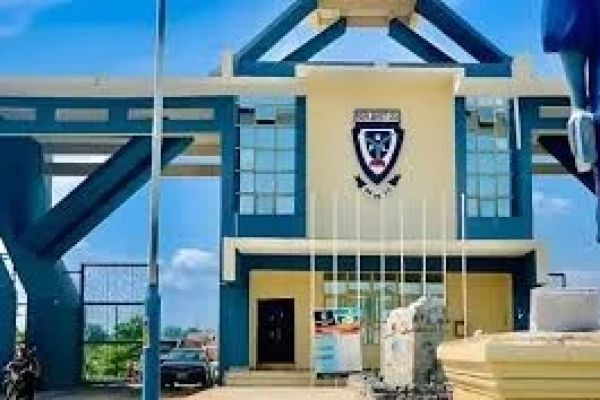
Students of the Department of Theatre Arts at the Federal University Lokoja (FUL) have taken community engagement beyond the classroom, using drama as a tool to promote unity, self-reliance, and grassroots development in Karaworo Community, New Layout, Lokoja.
The outreach, held on Sunday as part of the department's 2026 Community Theatre Project, featured a series of thought-provoking stage performances by 300-level students aimed at addressing pressing social and developmental challenges within the community.
Through creative storytelling and dramatic presentations, the students highlighted the dangers of tribalism, disunity, and poor cooperation, while encouraging residents to embrace peaceful coexistence, dialogue, and collective responsibility as pathways to sustainable development.
The performances also emphasized the importance of self-help initiatives, civic responsibility, and communal action in tackling local challenges, including inadequate infrastructure and social divisions.
Speaking at the event, the Vice Chancellor of Federal University Lokoja, Prof. Gbenga Ibileye, described the project as evidence of the growing relevance of Theatre Arts in contemporary society. According to him, the programme has become one of the most sought-after courses within the humanities faculty of the institution.
Prof. Ibileye stressed the need for stronger collaboration between universities and host communities, noting that such initiatives help residents identify practical solutions to their problems rather than depending solely on government intervention.
He urged students to harness their creative talents for entrepreneurship and self-employment, particularly in areas such as costume design, stage production, playwriting, makeup artistry, and event management.
“This is something that can provide a quality livelihood. It can make you self-employed and, with dedication, an employer of labour,” he said.
Encouraging the students further, the Vice Chancellor added: “Why are you looking for a job? The job is already in you. Use your skills to create opportunities for yourself and others.”
The Head of the Department of Theatre Arts, Dr. Felix Egwuda, explained that the Community Theatre Project is designed in two phases. The first involves community sensitisation, while the second focuses on evaluating progress made by both residents and relevant authorities in addressing identified challenges.
He noted that communities should not always wait for government interventions before tackling basic developmental issues.
“If government is not doing it, communities can organise themselves to address some of these challenges, particularly roads and water supply,” he said.
Chairman of the 2026 Planning Committee, Prof. Awam Menegbe, revealed that the students conducted extensive field research before developing the dramatic sketches presented during the outreach.
“We have come to sensitise the people on the importance of self-help, cooperation, and communal efforts towards community development,” he stated.
Prof. Menegbe noted that Karaworo is the latest beneficiary of the initiative, following previous engagements in Lokongoma, Ganaja, and Adankolo communities. He described the residents of Karaworo as exceptionally supportive and receptive, praising their hospitality and cooperation throughout the project.
Also speaking, the Etsu Lokoja, HRH Emmanuel Akamisoko Dauda-Shelika, commended the students for identifying critical community issues and promoting harmony among residents.
“There is no human being called government. We are the government. Development begins when people take responsibility for their communities,” the traditional ruler said.
He encouraged residents to adopt a communal mindset and work together for the common good.
A major highlight of the event was the presentation of several educational playlets performed by 86 students. The productions addressed challenges such as water scarcity, poor road networks, frequent accidents, and unreliable electricity supply.
The students also raised concerns about the health implications of relying on unsafe water sources, warning that such practices contribute to outbreaks of diseases such as cholera.
One of the performers, Yakubu Paul, stressed the importance of unity and collective action in solving community problems.
“If residents can put aside pride, tribalism, and religious differences, come together, and engage the right leaders, they can achieve meaningful development,” he said.
The Department of Theatre Arts reaffirmed its commitment to sustained community engagement and follow-up activities to ensure that issues identified during the outreach receive continued attention and action.
Download our Mobile App for easy access
https://play.google.com/store/apps/details?id=com.edutvmobile.ng&hl=en
Mobile App Lite
https://play.google.com/store/apps/details?id=com.edutvng.lite
https://play.google.com/store/apps/details?id=com.edutvmobile.ng&hl=en
Follow us on Youtube
https://youtube.com/@edutvnigeria
Follow us on LinkedIn -
https://ng.linkedin.com/company/edutvnigeria
Follow us on Instagram
https://instagram.com/edutvnigeria
Follow us on Facebook
https://www.facebook.com/edutvnigeria