It was Chief Obafemi Awolowo who said, ‘I do not want the children of my drivers to be drivers to my children, neither do I want the children of my cooks to be cooks to my children. I want free access to qualitative education for all.’”
That declaration by Obafemi Awolowo remains one of the most frequently cited statements on educational equality in Nigeria. His free education policy in the old Western Region set a benchmark that states in the South-West — including Osun State — continue to reference as a guiding philosophy.
However, recent findings by The Nigeria Education News suggest a widening gap between that historic vision and the current condition of some public primary schools in the state.
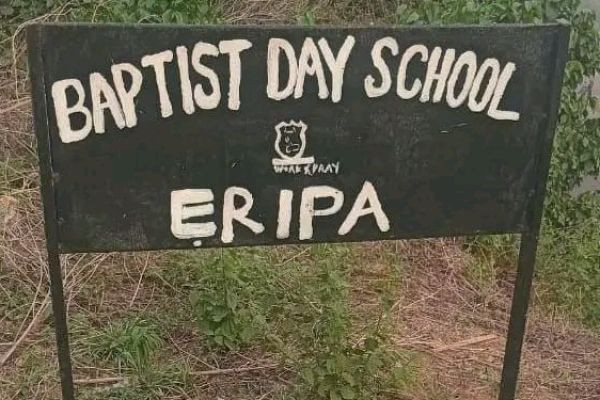
Visits to Young Tajudeen Primary School along Ojoro Abeere Road in Ede North and Baptist Day School in Eripa reveal visible signs of infrastructure deterioration.
At Young Tajudeen Primary School, sections of classroom blocks show cracked walls, peeling paint, damaged roofing sheets, and aging wooden doors barely hanging on their hinges. Some pupils were seen seated on worn-out desks, while others shared limited furniture. Classrooms with missing window louvers remain exposed to dust and rainfall, raising concerns about the learning environment.
Similar conditions were observed at Baptist Day School, Eripa, where weather-beaten walls, outdated furniture, and poorly maintained surroundings point to years of wear and limited renovation. Teachers who spoke anonymously described the working conditions as discouraging and inconsistent with expectations for a modern public education system.
Parents expressed concern that although enrolment figures remain relatively stable, infrastructure has not improved in line with rising educational demands and population growth.
Governor Ademola Adeleke has repeatedly invoked Awolowo’s legacy while pledging to improve education infrastructure across the state. Government officials have highlighted ongoing renovation efforts and intervention projects in selected schools.
Yet, observations from the inspected schools suggest that upgrades may be unevenly distributed. While some institutions reportedly benefited from renovation initiatives, others appear to have received little or no recent intervention.
Education stakeholders note that infrastructure decay often reflects prolonged under-maintenance, inconsistent capital investment, and limited oversight rather than a sudden decline.
Public discourse has also intensified around allegations concerning an estimated N13.7 billion reportedly linked to ghost worker irregularities within the state payroll system. The issue gained prominence following disputes surrounding personnel verification exercises conducted in 2023.
Although investigations and counterclaims remain ongoing — and no conclusive judicial determination has been made regarding the figures cited — civil society advocates argue that any funds lost to payroll discrepancies represent missed opportunities to strengthen school infrastructure.
Education policy analysts identify several structural challenges affecting primary schools in Osun State, including aging infrastructure inherited across multiple administrations, rising pupil populations without proportional classroom expansion, insufficient maintenance funding, procurement delays, and weak coordination between host communities and government authorities.
Experts maintain that meaningful reform requires long-term capital planning, transparent budgeting processes, and independent monitoring mechanisms that extend beyond short-term renovation drives.
Observers further caution against reducing the issue to partisan debate. Education remains central to social mobility, and research consistently shows that safe, well-ventilated classrooms with functional furniture significantly enhance attendance, concentration, and academic performance.
For many families across Osun State, public primary schools remain the most affordable — and often the only — option. Continued infrastructure deterioration risks widening inequality, the very outcome Awolowo’s philosophy sought to prevent.
follow us on whatsapp
https://whatsapp.com/channel/0029VaAOIUe9mrGeBhrju12b
Download our Mobile App for easy access
https://play.google.com/store/apps/details?id=com.edutvmobile.ng&hl=en
Mobile App Lite
https://play.google.com/store/apps/details?id=com.edutvng.lite
https://play.google.com/store/apps/details?id=com.edutvmobile.ng&hl=en
Follow us on Youtube
https://youtube.com/@edutvnigeria
Follow us on LinkedIn -
https://ng.linkedin.com/company/edutvnigeria
Follow us on Instagram
https://instagram.com/edutvnigeria
Follow us on Facebook
https://www.facebook.com/edutvnigeria/