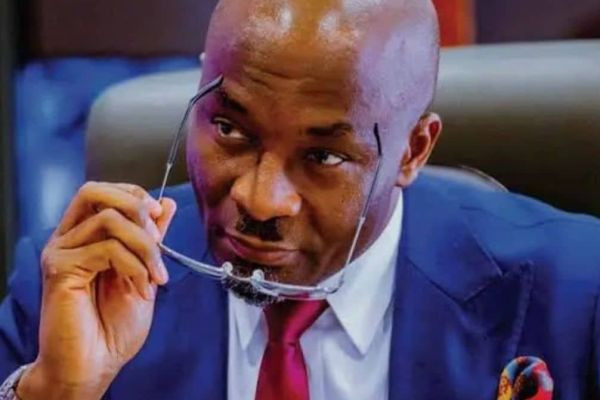
Afe Babalola University, Ado Ekiti – A rejoinder has been issued to Professor Abiodun Ojo, Provost of the College of Postgraduate Studies at Afe Babalola University, following his article titled “The New Certificate Craze: How Politicians are Quietly Eroding Academic Standards in Nigerian Universities.” The response challenges the article’s assertions regarding the academic credentials of Rt. Hon. Benjamin Kalu, Deputy Speaker of the House of Representatives.
The author of the rebuttal described Professor Ojo’s write-up as biased, misleading, and deliberately aimed at tarnishing the reputation of Deputy Speaker Kalu, rather than addressing broader systemic issues in Nigerian universities.
The rejoinder emphasizes Deputy Speaker Kalu’s robust academic profile, which includes:
-
Bachelor of Law (LL.B), University of Calabar
-
Master of Law (LL.M) in Terrorism and Humanitarian Law (Distinction), University of Calabar
-
Master of Business Administration (MBA), Oxford Brookes University
-
Various certifications from institutions such as Harvard Kennedy School, University of Oxford, and the United Nations Interregional Crime and Justice Research Institute (UNICRI)
Further, the response details Kalu’s rigorous engagement in his Ph.D. program in Public Policy and Strategic Studies at the University of Abuja (now Yakubu Gowon University). Serving as External Examiner, the author attested to Kalu’s competence, intellectual rigor, and adherence to all academic requirements, including coursework, seminars, fieldwork, and external defense.
The rebuttal refutes claims that Kalu’s program was accelerated or influenced by political considerations. According to the response, Kalu spent over four years in the program, met admission criteria, completed all required courses, and underwent a formal internal and external examination process—conducted without interference or political influence.
The author further challenges Professor Ojo to provide proof supporting any insinuation of impropriety, highlighting that all records and supervisors’ attestations confirm Kalu’s academic standing.
Concluding the rejoinder, the author questions the motivations behind Professor Ojo’s article, suggesting an undue focus on Kalu’s personal academic journey rather than an objective critique of systemic issues in Nigerian higher education. The piece urges that political biases should not interfere with academic evaluation or reporting.